
Has someone in your group just told you they are not a wine drinker? Or maybe you have already done three tastings and the afternoon needs a different direction. Or you are travelling with kids who have been patient long enough.
The Barossa Valley is built around wine. But it is also a region with a genuinely full day of activities outside the cellar door. Most visitors miss the half of it.
If you’re booking a stay around Seppetsfield or anywhere around the valley, here are the best things to do in Barossa Valley that have nothing to do with wine, based on what is actually worth your time.
See the whole valley from the air – hot air ballooning in the Barossa
This is the single most memorable non-wine experience in the region. Nothing from the ground replicates what you see from 300 metres up over the Barossa at sunrise.
Barossa Balloon Adventures and Balloon Adventures Australia both operate sunrise flights departing early morning from near the Novotel Barossa Valley Resort.
Flights run approximately one hour. After landing, the traditional post-flight breakfast is served: sparkling wine is standard, but non-alcoholic options are available on request.
From the air you get a full picture of the valley: vineyard blocks running to the horizon, the palm-lined curve of Seppeltsfield Road, the rooftops of Tanunda and Angaston, and the Barossa Ranges rising on the eastern edge. You will understand the valley’s scale in a way that no cellar door map communicates.
Pricing: Approximately $300-450 AUD per person. Book well in advance and have a backup plan: flights are weather-dependent and can be cancelled with 12-24 hours’ notice.
Barossa helicopter tours: a shorter option
Barossa Helicopters operates out of Lyndoch for guests who want the aerial view without the 4am wake-up call.
Flights run approximately 15-20 minutes and cover Jacob’s Creek valley, the Steingarten Vineyard on the Barossa divide, and the wider valley floor. Faster, cheaper and still genuinely impressive.
Cycling the Barossa: the trail that connects the whole region
The Barossa has a dedicated cycling trail network that is one of the most accessible ways to see the valley properly. You can book with the Australian Cycle Tours to access main routes like:
- Nuriootpa to Tanunda: 7km, flat and paved. Suits anyone regardless of fitness. It takes around 30-40 minutes of easy riding.
- Tanunda to Angaston: 6km, hillier and more scenic. Worth the extra effort.
- Full Barossa Cycle Track: approximately 40km connecting Nuriootpa, Tanunda and Rowland Flat. A full half-day or more.
E-bikes are available for hire in the region, which makes the hillier sections doable for guests who have not been on a bike in a while. The trail avoids main roads for most of its length, passing through historic streetscapes, alongside vineyard rows and through native bush.
Best season for cycling: autumn, March through May. The valley floor gets hot in summer, regularly hitting 38-40 degrees Celsius in January and February. Spring also works well. Carry water regardless of season.
Practical tip: Start early, even in autumn. The Barossa gets warm by midday and the roads get busier as cellar door traffic builds from 11am.
The Whispering Wall: the Barossa’s most unusual attraction
This one is genuinely strange and genuinely worth a stop. The Whispering Wall is the curved retaining wall of the Barossa Reservoir near Williamstown, at the southern end of the region.
Because of the wall’s perfect concave arc, a whisper spoken at one end carries clearly to the other end, 140 metres away.
The wall stands nine stories high above the reservoir water on one side. Standing at the base of it with the drop beside you and a whisper reaching you from across the arc is an experience that stays with you.
Entry is free. There is parkland around the reservoir for a picnic. Williamstown is approximately 10 minutes from Lyndoch, making it an easy first stop when driving into the Barossa from Adelaide on the Barossa Valley Way.
Best conditions: Morning, before the wind picks up. Wind dampens the acoustic effect significantly.
Mengler Hill Lookout and Sculpture Park: the best views in the Barossa
Mengler Hill Lookout sits on the eastern ridge of the Barossa Valley, near Angaston. It offers the most complete panorama of the valley floor available from ground level, with vineyard blocks, historic townships and the Barossa Ranges all visible in one frame.
On clear days in the right season, the ocean is visible from the lookout. At sunset, the light across the valley turns the kind of colour that makes even experienced photographers stop and pay attention.
The adjacent Barossa Sculpture Park adds something extra: outdoor artworks by local and international artists positioned among the native vegetation. This is a real outdoor gallery, not a tourist display. Walk it slowly.
Free to visit. The road up is sealed. Best in the late afternoon. Combine it with the Barossa Farmers Market nearby on Saturday morning and you have a full day without touching a cellar door.
Barossa Farmers Market: the Saturday morning locals go to
The Barossa Farmers Market runs every Saturday morning near Angaston. It is one of the best regional markets in South Australia and it is not a tourist market. Locals use it. Producers come from across the valley.
What you will find:
- Artisan bread and sourdough from local bakers
- Regional cheese and charcuterie
- Fresh vegetables and fruit from valley growers
- Barossa-made preserves, condiments and smallgoods
- Local honey, eggs and specialty produce
Arrive before 9am for the best selection. The market is also where CABN Barossa guests can stock their cabin kitchenettes for a self-catered stay. Bring a cooler bag.
The market is also where you start to understand what makes Barossa food culture distinct from what is served at cellar doors. It is direct, seasonal and genuinely local.
Maggie Beer’s Farm Shop in Nuriootpa
Maggie Beer’s Farm Shop is a Barossa institution and it has nothing to do with wine. Free samples of Maggie Beer products, in-house cafe food, Maggie’s own ice cream and a large pond full of turtles are all part of the visit.
The range covers pheasant farm products, game pate, preserves, verjuice (the non-alcoholic grape juice used in cooking), and seasonal specialty items. The cafe serves food all day. It suits families, food lovers and anyone who wants to take home something genuinely from the Barossa.
Open daily. Located in Nuriootpa, the largest of the main Barossa towns. Easy to combine with a run to the Barossa Cycle Track trailhead nearby.
Barossa Valley Chocolate Company: Tanunda
The Barossa Valley Chocolate Company in Tanunda makes artisan chocolate on-site. You can watch the chocolatiers at work, try the chocolate and local cordial pairing experience, or go for the chocolate and craft beer flight.
For travellers with kids or anyone not interested in wine tastings, this is the most consistently recommended non-wine alternative in the main Tanunda township. It is central, walkable from the main street and genuinely good.
Kaiserstuhl Conservation Park: hiking and native wildlife
Kaiserstuhl Conservation Park sits 12km south-east of Tanunda. Two main walking trails access the park. The signature feature is Horse Head Rock, visible from the main trail. The walk is not technical, but it requires reasonable fitness and sun protection.
Native wildlife seen regularly in the park:
- Kangaroos
- Echidnas
- A wide range of native birds including parrots, kookaburras and wedge-tailed eagles
The park is part of the Barossa Ranges landscape and feels genuinely wild compared to the managed vineyard floor below. Best in spring (September-November) for wildflowers and cooler conditions. Take water and start before 10am in warmer months.
This is the Barossa’s best option for a proper bushwalk. No entry fee. No booking required.
The Barossa Heritage Trail: a self-guided history drive
The Barossa Heritage Trail is a self-guided route through more than 20 towns and over 100 historic sites across the valley. It was designed as a drive but sections are cycleable.
The Barossa was settled in 1842 by German Lutherans who fled religious persecution in Silesia. That heritage is visible in the stone churches, village layouts and place names across the valley. Tanunda has a well-preserved historic main street. Angaston was settled by English colonists and has a different architectural character.
The Barossa Visitor Centre in Tanunda stocks trail maps and guides. The Tanunda Town Walk is a compact inner-town version suitable for an hour’s exploration.
Plan your Barossa base: where to stay for the full experience
The activities above fill two days comfortably. To make the most of them, staying inside the Barossa Valley itself means you are 10 minutes from most of these sites rather than an hour from Adelaide.
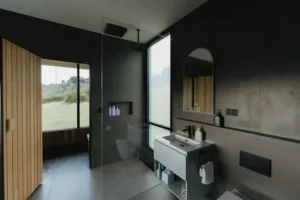
CABN Barossa Valley has two off-grid cabins on a vineyard property in the region: CABN Elsie (for two, wood fire and vineyard views) and CABN Chloe (sleeps up to four). Self-catered, solar-powered and positioned to access all of the above without a long drive.
For the luxury tier, CABN CANVS and CABN X Seppeltsfield is along Seppeltsfield Road with a private sauna, floor-to-ceiling vineyard views and direct road access to the Seppeltsfield Winery. CABN also offers the Exclusive Barossa Valley Tour with Wanderlust Willunga, a guided experience of the region bookable through the CABN website.